


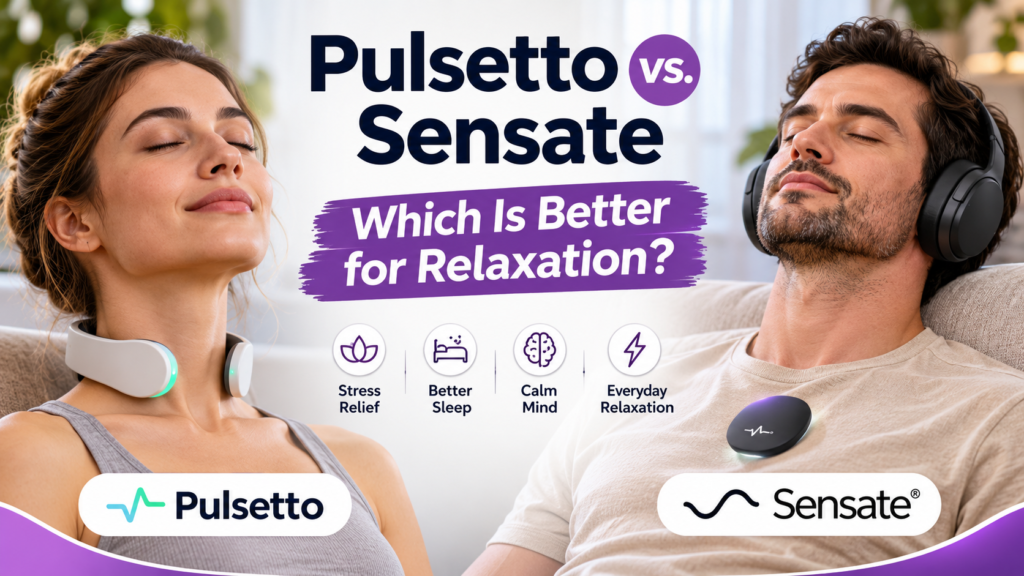
Modern life can make it difficult to find time to relax. Between busy work schedules, constant notifications, family responsibilities, and everyday pressures, many people are looking for convenient ways to unwind and improve their wellness routines.
That’s one reason why wearable relaxation technology is attracting attention.
Two products that often come up in this conversation are Pulsetto and Sensate. Both are designed to support relaxation and stress management, but they use very different technologies to create their experiences.
Pulsetto uses gentle electrical stimulation around the neck, while Sensate combines low-frequency vibrations with relaxing audio experiences.
So, which one deserves a place in your wellness routine?
In this comparison, we’ll explore Pulsetto vs. Sensate, including their technology, features, usability, pricing, advantages, and potential limitations.
1. What Is Pulsetto?
Pulsetto is a wearable wellness device designed around transcutaneous vagus nerve stimulation (tVNS).
The vagus nerve is an important part of the autonomic nervous system, which helps regulate several automatic bodily functions. It is also involved in the body’s parasympathetic response, commonly associated with rest and relaxation.
Pulsetto uses gentle electrical impulses delivered through electrodes positioned around the neck. The device connects to a companion smartphone app, where users can select different programs depending on their wellness goals.
Its available programs include options focused on:
- Stress management
- Relaxation and calmness
- Sleep support
- Focus
- Recovery
One of Pulsetto’s main attractions is its hands-free design. Once positioned correctly, users can follow a session without constantly holding the device.
For people interested in exploring electrical stimulation technology as part of their wellness routine, Pulsetto offers a more technology-driven approach.
2. What Is Sensate?
Sensate takes a different approach to relaxation.
Rather than using electrical stimulation, Sensate is a small, pebble-shaped device that rests against the chest, typically around the sternum.
It combines low-frequency vibrations with synchronized soundscapes delivered through its companion mobile app.
The idea is to create an immersive sensory experience that encourages users to slow down, relax, and take a break from everyday distractions.
Sensate is particularly interesting for people who enjoy meditation, calming music, and guided relaxation sessions.
Its key features include:
- Low-frequency vibration technology
- Synchronized audio experiences
- Multiple relaxing soundscapes
- A portable and lightweight design
- Companion app for guided sessions
Unlike Pulsetto, Sensate doesn’t deliver electrical stimulation. Its approach is centered on creating a calming sensory experience.
3. Pulsetto vs. Sensate: Key Differences at a Glance
Before exploring each device in detail, here’s a quick comparison.
| Feature | Pulsetto | Sensate |
|---|---|---|
| Technology | Electrical stimulation (tVNS) | Low-frequency vibrations |
| Placement | Around the neck | On the chest |
| Audio | Not essential to the core experience | Synchronized soundscapes |
| Mobile app | Yes | Yes |
| Main approach | Vagus nerve stimulation | Sensory relaxation |
| Usage style | Short structured sessions | Relaxation and meditation sessions |
| Best suited for | People interested in tVNS technology | People who enjoy guided relaxation |
| Subscription | Optional premium features | Optional premium content |
| Portability | Wearable neck device | Compact chest device |
The biggest difference is how these products approach relaxation. Pulsetto focuses on electrical stimulation, whereas Sensate emphasizes vibrations and sound.
4. Technology: How Do Pulsetto and Sensate Work?
Understanding the technology behind both devices can help you make a more informed decision.
Pulsetto: Electrical Vagus Nerve Stimulation
Pulsetto uses transcutaneous electrical stimulation around the neck.
This approach is designed to stimulate pathways associated with the vagus nerve without requiring surgery or an implanted device.
Users position the device around their neck, apply the recommended conductive gel, and select a program through the mobile app.
The electrical impulses may feel unusual initially, so starting with a low intensity and following the manufacturer’s instructions is important.
Research into non-invasive vagus nerve stimulation is ongoing, and results from clinical research should not automatically be interpreted as proof that Pulsetto itself delivers specific medical benefits.
Sensate: Vibrations and Soundscapes
Sensate uses a combination of low-frequency vibrations and audio.
The device rests against the chest and produces vibrations that work alongside soundscapes played through headphones.
This creates a more immersive relaxation experience.
For example, someone returning home after a demanding day could spend a few minutes lying comfortably, listening to calming audio, and experiencing the device’s gentle vibrations.
It is designed to make relaxation sessions feel more structured and engaging.
However, evidence supporting Sensate’s specific claims about vagus nerve effects remains limited.
5. Which Device Is Better for Everyday Relaxation?
This is where personal preference becomes particularly important.
When Pulsetto Makes More Sense
Pulsetto may appeal to people who:
- Want to explore non-invasive electrical stimulation technology.
- Prefer a structured wellness routine.
- Like having different programs for different goals.
- Are interested in tracking wellness-related information through an app.
- Want a hands-free neck-worn device.
Its technology-focused approach makes it an interesting option for people exploring modern wellness gadgets.
When Sensate Makes More Sense
Sensate may be a better fit for people who:
- Enjoy meditation and calming audio.
- Prefer gentle vibrations over electrical stimulation.
- Want a dedicated relaxation ritual.
- Like using wellness devices before bedtime.
- Prefer a simple sensory experience without applying conductive gel.
Its combination of sound and vibration makes it appealing to people who want to create a peaceful environment for relaxation.
Our take: If your priority is exploring tVNS technology, Pulsetto has the advantage. If you simply want a more soothing, audio-based relaxation experience, Sensate may be the more enjoyable choice.
6. Design and Ease of Use
A wellness device should fit naturally into your daily routine. Otherwise, even the most interesting technology can end up sitting unused in a drawer.
Pulsetto Design
Pulsetto features a wearable neck design intended for hands-free sessions.
The setup involves positioning the device correctly, applying conductive gel, connecting to the app, and selecting a suitable program.
Some users may need time to become comfortable with the electrical sensations.
It is important to follow the manufacturer’s instructions rather than increasing the intensity too quickly.
Sensate Design
Sensate has a compact, pebble-like design that sits against the chest.
It is generally straightforward to use:
- Position the device against your chest.
- Open the Sensate mobile app.
- Choose a soundscape.
- Put on your headphones.
- Relax and enjoy the session.
Its straightforward setup may appeal to beginners who want to incorporate a few minutes of relaxation into their day.
7. Pulsetto vs. Sensate: Pricing and Value
Both products sit within the premium wellness gadget category.
Pricing can change depending on the model, bundle, promotions, and location.
| Pricing consideration | Pulsetto | Sensate |
|---|---|---|
| Device cost | Varies by model and offer | Around $299 for Sensate 2 |
| Free app access | Yes | Yes |
| Premium subscription | Optional | Optional |
| Additional requirements | Conductive gel | Compatible headphones for audio sessions |
| Warranty and returns | Check current official terms | Check current official terms |
Pulsetto also offers premium app features, while Sensate offers optional additional audio content.
When comparing the total cost, consider more than the initial device price. Look at subscription charges, accessories, replacement supplies, warranty coverage, and return policies.
For the latest offers, check the official websites before purchasing.
8. Pros and Cons: Pulsetto vs. Sensate
Pulsetto
Pros
- Uses electrical tVNS technology.
- Hands-free wearable design.
- Multiple wellness programs.
- Companion app with additional features.
- Interesting option for people exploring nervous system technology.
Cons
- Electrical sensations may feel uncomfortable for some users.
- Requires conductive gel.
- Has specific safety restrictions.
- Premium app features may involve additional costs.
Sensate
Pros
- Combines vibrations with relaxing audio.
- Simple and compact design.
- No conductive gel required.
- Suitable for guided relaxation routines.
- Less technical-feeling experience.
Cons
- Requires a smartphone and companion app.
- Audio sessions are central to the experience.
- Limited independent evidence for device-specific health claims.
- Premium features may involve additional costs.
9. Safety and Things to Consider Before Buying
Although both products are marketed as wellness devices, they are not interchangeable with medical treatments.
Pulsetto uses electrical stimulation and has specific contraindications. People with implanted electronic devices, certain cardiovascular or neurological conditions, pregnancy, or other listed medical circumstances should consult a healthcare professional and review the manufacturer’s safety guidance before considering use.
Sensate uses vibrations rather than electrical stimulation, but users with relevant medical conditions, skin concerns, or sensory sensitivities should also check the manufacturer’s guidance.
Neither device should be considered a replacement for professional medical advice, treatment, or established approaches to managing anxiety, sleep problems, or other health conditions.
10. Final Verdict: Pulsetto or Sensate – Which Should You Choose?
So, which is better: Pulsetto or Sensate?
The answer depends on what you expect from a relaxation device.
Choose Pulsetto if you’re interested in electrical vagus nerve stimulation, structured wellness programs, and exploring technology designed around nervous system support.
Choose Sensate if you prefer gentle vibrations, immersive soundscapes, and a more straightforward relaxation experience.
Neither device is a guaranteed solution for stress or sleep difficulties, and individual experiences can vary.
Our overall recommendation is simple: Pulsetto is the more suitable choice for people specifically interested in tVNS technology, while Sensate is worth considering for those who want to make relaxation and mindfulness a more enjoyable part of their daily routine.
Before purchasing either one, compare the latest features, prices, subscription options, and return policies.
Frequently Asked Questions (FAQs)
1. Is Pulsetto better than Sensate?
Pulsetto may be a better choice for people interested in electrical vagus nerve stimulation. Sensate may be more appealing to people who prefer vibration-based relaxation and guided audio experiences.
2. Does Sensate actually stimulate the vagus nerve?
Sensate uses low-frequency vibrations against the chest alongside synchronized soundscapes. The company describes this as supporting vagus nerve toning, but independent evidence confirming its specific effects on the vagus nerve remains limited.
3. Can Pulsetto help with relaxation?
Pulsetto is designed to support relaxation through non-invasive electrical stimulation. However, individual results vary, and its effectiveness for specific health outcomes has not been conclusively established.
4. Can I use Sensate before sleeping?
Sensate can be incorporated into an evening relaxation routine. Its guided audio and vibration sessions may help create a calming environment before bedtime.
5. Do Pulsetto and Sensate require subscriptions?
Both offer app experiences, with optional paid features or content. Check the latest subscription terms before purchasing, as available features can change.
6. Which is easier for beginners?
Sensate may feel more approachable for beginners who enjoy meditation and calming audio. Pulsetto involves positioning electrodes and applying conductive gel, which may require a little more setup.
7. Are Pulsetto and Sensate medical devices?
They are marketed as general wellness products, not replacements for medical diagnosis or treatment. Always consult a qualified healthcare professional if you have medical concerns.
Final Thought
Relaxation doesn’t have to mean completely changing your lifestyle. Sometimes, creating a few minutes of uninterrupted time for yourself can be a meaningful first step.
Whether you choose Pulsetto or Sensate, focus on finding a wellness routine that feels comfortable, practical, and sustainable.